



REGIOS – REGIONS OF THE FUTURE
We are a group of activists who hold regionalism close to our hearts. We come from different backgrounds and different parts of the Europe. However, we are united by a common denominator – a passion for the idea of civic regionalism. We believe that a country is as strong as its regions, and the European Union is as strong as its member states. It is decentralized countries, where regions play an important role, that are characterized by a high standard of living, a friendly civil society, and innovation. Join us and let’s build the regions of the future together!
REGIOS Association

REGIONS FOR EVERYONE
Regionalism is an idea that aims to strengthen the competences of regions and provide them with funding so that they can better serve society. Weak regions have never been and are not attractive, while strong ones strongly attract and encourage people to tie their future to them. Below are some values that we believe will strengthen the bonds between citizens of a given region and the relationship between citizens and their regions. These values guide us in our activities. Do you share them? Don’t wait, get in touch with us! Let’s build the regions of the future together.
European regions
The fate of the regions currently within Poland’s borders varied greatly and was linked to different cultural circles. However, Poland’s accession to the European Union, together with its regions, sealed its desire to join the Western European cultural and political world. Even today, we cannot imagine our regions outside the European Union or Europe without them. We are supporters of the democratic federalization of the European Union with strong regions within its structures. We are also aware that the only guarantee of security for present and future generations is to make regional interests European interests and European interests regional interests. However, this will not happen until the state apparatus stops perpetuating nationalist sentiments that should have been buried in the dustbin of history long ago.
Innovative regions
The peripherality of our regions’ economies in relation to globalization processes is constantly increasing. For example, Silesia, once one of the most industrialized regions of Western Europe, is moving towards becoming a depopulated post-industrial and agricultural region of Eastern Europe. Decades of neglect cannot be made up for in a few years by relying on the populist slogans of the current mainstream. A long-term perspective for regional development must take into account the interdependence of education, science, the labor market, research and development, technology transfer, and digitization. We see an innovative knowledge-based economy as an opportunity for all regions. As examples from other countries show, only high and wise spending on science and research and development guarantees stable GDP growth and a high standard of living.
Multicultural regions
For centuries, Silesia has been a melting pot of cultures, languages, and religions. The same is true today: for Poles, Silesians, Germans, Czechs, and many others, Silesia has become a small, familiar homeland – a Hajmat. We therefore regard it as a model of tolerance and coexistence between different cultural, religious, and linguistic groups. Today, we are facing the challenges of mass migration, which is changing the social landscape of Europe. Bearing in mind the experiences of different regions and future challenges, we want to guarantee the rights of national, ethnic, cultural, and sexual minorities and create a wise and realistic migration policy with an integrative model of multiculturalism. We believe that the protection of the rights of minorities of all kinds should be guaranteed by law and administration and reflected in electoral regulations that limit the cementing of the political scene.
Decentralization and a state strengthened by its regions
Most Western European countries adopt a federal or regionalist model of administrative division, with a strong position for local government. There can be no strong democracy or stable states without strong regions and local governments. We recognize that political, administrative, and economic decentralization will strengthen the position of local governments, increase citizen participation in public life, protect democracy from authoritarian centralism, and be a starting point for solving socio-economic problems related to population density imbalances and migration.
Virtual
e-regions
E-state is one of the unique ideas implemented in Estonia, a country with a population of 1.3 million. The country prides itself on its computerization, which is unique in Europe, and its forward-looking solutions in the virtual space. It is often said that they have managed to achieve this precisely because of their relatively small population, which makes it impossible to introduce such solutions in Poland. Therefore, since Poland is too large, we propose that e-region, the equivalent of Estonia’s e-state, be introduced at a more agile regional level. Moreover, virtual space has no borders in the classic sense of the word, and its use would contribute to solving common problems in cross-border areas.
The rule of law and
democracy in practice
Contemporary Europe is facing a wave of crises of the rule of law, which has not spared Poland either. The mechanisms of liberal democracy have been used to create quasi-authoritarian systems with a caricature of democracy based on the will of minimal majorities and discrimination against minorities. We advocate strong mechanisms for monitoring the rule of law within the European Union, the participation of local governments in the mechanisms for monitoring and controlling the justice system, and limiting its centralism.
Area of operation
The REGIOS Association operates throughout Poland. Task Forces in areas where our activity is most intense are marked on the attached interactive map of provinces. Information about our Teams can also be found in the Menu -> About us -> Our Teams.
The partner of the REGIOS Association in the Czech Republic is mSTAN Moravskoslezský kraj.
News
You can find more REGIOS news here →

Regios is in Katowice.
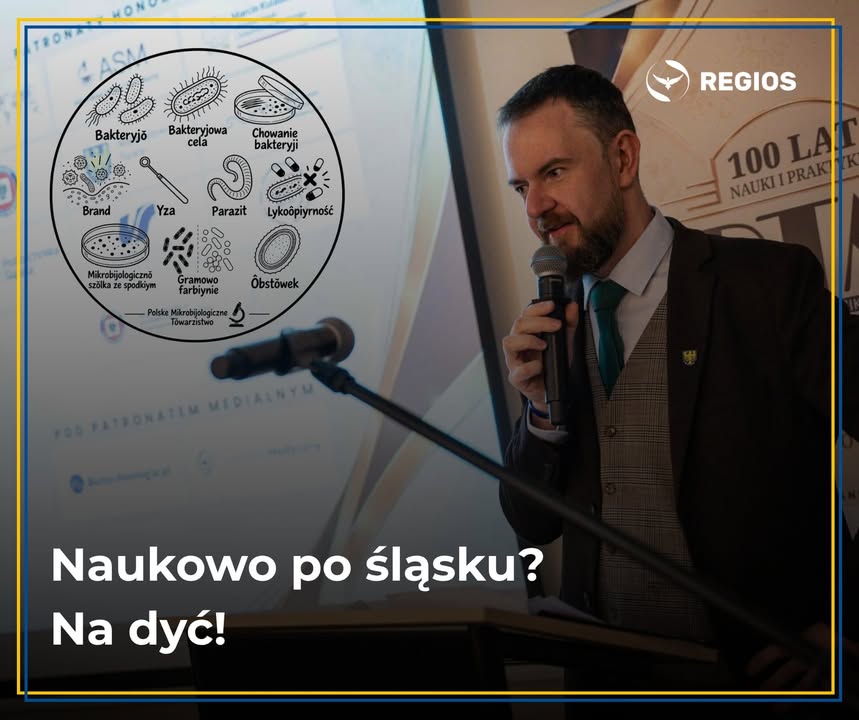
Czy po śląsku można mówić o bakteriach, wirusach i innych zagadnieniach naukowych? Jak się okazuje, jak najbardziej! 🧫🦠 Udowodnił to nasz współprzewodniczący REGIOS, Tomasz Hutsch, który na zaproszenie Polskiego Towarzystwa Mikrobiologów współprowadził po śląsku XXX Jubileuszowy Zjazd tej organizacji, odbywający się w Katowicach. 🎓🔬 Podczas wydarzenia język śląski zagościł nie tylko w oficjalnym otwarciu i części prowadzenia konferencji, ale również w materiałach przygotowanych dla jej uczestników. Tomasz Hutsch wspólnie z dr. Kamilem Czaińskim z Instytutu Slawistyki PAN opracowali śląskie słownictwo mikrobiologiczne, które znalazło się na specjalnych zakładkach do książek. 📚🦠 Co ciekawe, nie jest to pierwszy raz, kiedy język śląski wkroczył do świata nauki. Już w 2024 roku dr Kamil Czaiński opublikował artykuł naukowy napisany po śląsku, co spotkało się z entuzjastycznym przyjęciem chociażby ze strony dr. Krzysztofa M. Maja, który komentując tę inicjatywę, stwierdził, że „więcej takich inicjatyw potrzebujemy”. Jak widać, nie trzeba było długo czekać na kolejną! 🧬📖 Francuscy filozofowie Gilles Deleuze i Félix Guattari opisywali proces deterytorializacji języka, polegający między innymi na przekraczaniu utrwalonych norm i sposobów jego używania. Można w tym kontekście spojrzeć również na współczesny rozwój śląszczyzny, która coraz częściej wychodzi poza obszary tradycyjnie z nią kojarzone. Dziś śląski znajduje zastosowanie nie tylko w kulturze i życiu codziennym, ale także w nauce, czego kolejnym przykładem jest inicjatywa Tomasza Hutscha i pomoc korektorska Kamila Czaińskiego.💛💙 Jako REGIOS cieszymy się, że nasz współprzewodniczący miał okazję zaprezentować śląską godkę w gronie naukowców i badaczy z całej Polski. Wierzymy, że rozwijanie śląskiego słownictwa naukowego jest kolejnym krokiem w kierunku pokazania, że nasz język może funkcjonować we wszystkich dziedzinach współczesnego życia. 💛💙 Skoro mikrobiologia doczekała się już swojej silezjanizacji, to jak myślicie, jaka dziedzina nauki będzie następna? Fizyka kwantowa, astronomia, a może informatyka? 🤔🔭💻 Regios Śląsk Regios Ślōnsk Ôpolski Wachtyrz Opolskie jest śląskie Alan Jasik – górnośląski działacz społeczno-ludowy @liderzy
Regios
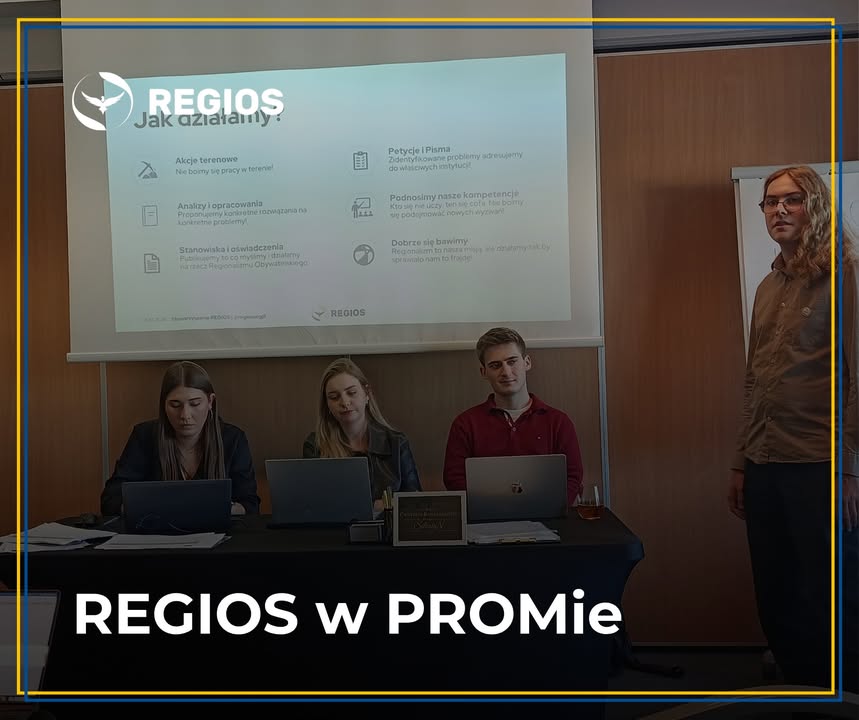
Z dumą możemy poinformować że na ostatnim zjeździe Polska Rada Organizacji Młodzieżowych PROM nasze stowarzyszenie zostało przyjęte w poczet członków zwyczajnych. Naszą organizację reprezentowali Szymon Rokicki, który przedstawił profil naszej działalności oraz Łukasz Janik. Podczas zjazdu uchwaliliśmy nowy statut organizacji oraz poruszaliśmy istotne kwestie dla działania organizacji.
Naszą aktywność na rzecz młodzieży w formule PROM rozpoczęliśmy już kilka lat temu i cieszymy się, że zostaliśmy docenieni. Dziękujemy za zaufanie delegatom pozostałych organizacji i nie możemy się doczekać kolejnego zjazdu!
Jak zawsze gratulacje dla Zarządu PROM dla profesjonalną organizację wydarzenia. Wielkie brawa za rozwijanie i profesjonalizację PROM!

Regios
Uprawnienia uprawnieniami, chęci chęciami, a forma formą… Czy taka polityczna promocja pióropusza ma sens? Czy zachowuje przy tym dobry smak?🤔
Zapraszamy do zapoznania się z artykułem Wojciech K. Janik, jednego z naszych członków…⬇️
Cepeliada i politykerstwo ze fyjderpuszym
Chyba niy ma nic gorszego jak deptanie po tym, do cego ftoś mo tako srogo zoca!

Regios is feeling wonderful in Katowice.
📚🏆 Kolejny śląski pisarz z nagrodą "Nike"❗️
Po Zbigniewie Rokicie, ta prestiżowa nagroda literacka trafiła ponownie do pisarza, który otwarcie mówi o byciu Ślązakiem.
Mowa oczywiście o Szczepōnie Twardochu – zdobył on tę nagrodę dzięki powieści "Null" 📖, opowiadającej o historyku mieszkającym w Warszawie, który wstrząśnięty wybuchem pełnoskalowej agresji na Ukrainę🇺🇦,wyjeżdża wspomóc walczący naród w potrzebie.
Powieść porusza również niełatwe tematy relacji polsko-ukraińskich po przez złożoną tożsamość bohatera, jako potomka osób, które zginęły na Wołyniu.
Książka przedstawia brutalność wojny toczącej się za naszą wschodnią granicą, przedstawia z jednej strony krajobraz tytułowego "Null", który nasuwa skojarzenia z frontem zachodnim I Wojny Światowej, a jednocześnie opisuje najnowsze technologie takie jak Drony i Starlinki. 🪖🛰️
My jako REGIOS gratulujemy Szczepōnowi Twardochowi, zachęcamy do przeczytania książki oraz polecamy wam wsparcie zbiórek na rzecz wysiłku wojennego Ukrainy. 🤝
Regios
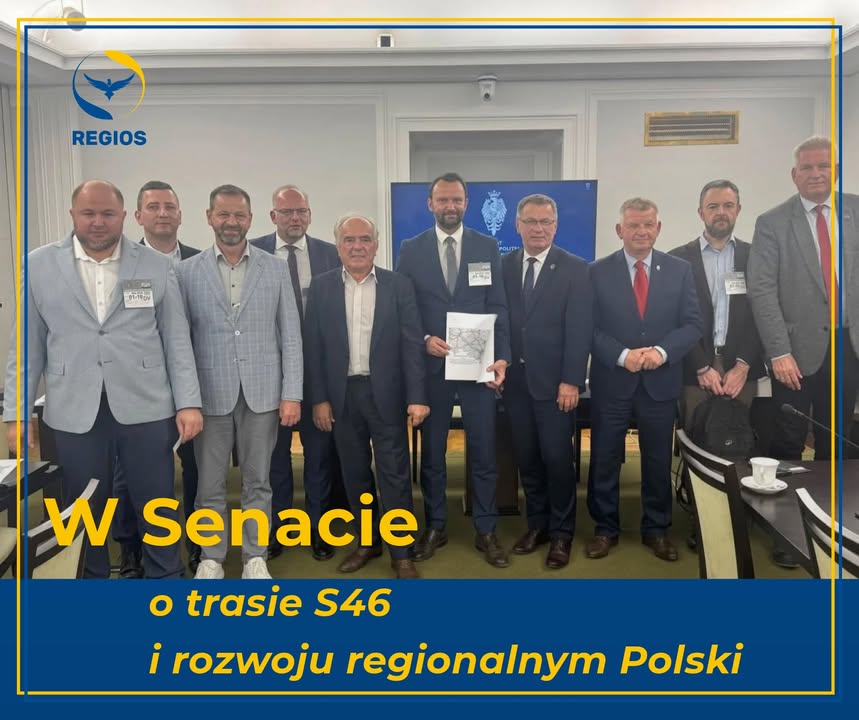
🛣️ Regios w Senacie o trasie S46 i rozwoju transregionalnym Odbyło się posiedzenie Parlamentarnego Zespołu ds. Budowy Drogi Ekspresowej S46. W spotkaniu, jako wsparcie strony społecznej i samorządowej, uczestniczył Tomasz Hutsch, współprzewodniczący REGIOS. 🤝 Dziękujemy Senatorowi Beniaminowi Godyli, kierującemu pracami Zespołu, za zaproszenie do rozmowy o przyszłości tej trasy. Dla REGIOS S46 to nie tylko inwestycja regionalna. Szlak Staropolski w swojej koncepcji ma łączyć granicę z Czechami z wschodnią granicą Polski przez m.in. Opole, Częstochowę, Kielce i Lublin. Widzimy w tym kilka ważnych wymiarów: 🇨🇿🇵🇱🇺🇦 Międzynarodowy charakter – połączenie kierunku czeskiego ze wschodnią Polską i Ukrainą może nabrać szczególnego znaczenia dla przyszłej odbudowy i współpracy gospodarczej. 🏭 Przemysł i bezpieczeństwo – sprawny korytarz transportowy może wzmacniać logistykę przemysłu metalowego, maszynowego i obronnego. 🌍 Integracja Śląska – lepsze połączenia między województwami dolnośląskim, opolskim i śląskim oraz z Republiką Czeską. 🏙️ Impuls rozwojowy dla osi Opole–Częstochowa–Kielce–Lublin i ich obszarów funkcjonalnych. ↔️ Integracja Polski Wschód–Zachód – od Wrocławia i Czech po Lublin i wschodnią granicę. 🔄 Powiązanie osi Północ–Południe z kluczowymi trasami, m.in. A1, S7, S8 i S11. REGIOS chce uczestniczyć w tej debacie z perspektywy regionalnej, transregionalnej i ogólnopolskiej – tak, aby ewentualny rozwój S46 był analizowany jako element całej sieci transportowej Polski. 🛣️🇵🇱 #S46 #SzlakStaropolski #REGIOS #Transport #Infrastruktura #Polska #RozwójRegionalny #Śląsk #Opolskie #Czechy #Ukraina #Logistyka #Przemysł #Samorząd